my email has changed to eahelfgott@gmail.com
Monday, August 29, 2016


Thursday, April 07, 2016
On Bernie and the jews - I am re-publishing (see below) a blog I wrote two years ago because I have recently become Facebook friends with a woman i knew in junior high school. she will not vote for bernie sanders because she's afraid he is not a friend to israel. i think she's wrong, in the same way my cousin sharon was wrong when she referred to me as an "israel hater." that is far from the truth and i'm sorry she feels that way.
hate begets hate and when i hear another sister jew say she doesn't care about arab mothers because their sons killed her love one, i am brokenhearted. the only antidote to hate is kindness, generosity and love, which doesn't mean you let someone beat you up or murder; it does mean you sit down with antagonists and mediate between them.
i thought i would not write on this subject again - i've been busy writing a biography - but this is my immediate history and i must embrace it, not run away from it, as maybe I have been doing.my girlhood classmate is passionate about Israel.i'm passionate about human beings and other creatures,my dog, for instance.
i'm passionate about bernie sanders because he has the courage to bring commitment and hope to young people the world over. i wish more of us older folks would listen to him.I'm convinced he can help solve huge problems,including those among all my people in the Middle East, the man gives me hope. he helps me get out of bed in the morning. he helps me dream of peace
Esther
SUNDAY, JUNE 22, 2014
From Jew to Jew: Dear Sharon
This is my response to your article, “We are here to stay,” in The Times of Israel, June 22, 2014: I wrote to you privately – cousin to cousin - not expecting my words to be printed in an online publication or anywhere else; but since you chose to publish them, I take this opportunity to stand by my words and to explain those that I did not clarify well enough.If you choose to use these words in print, my name should follow. I will not hide from them.
I did not say that I was an atheist (though many respectable people are). Rather, I do not presume to know whether God exists or if the idea of God was created by human beings or if God Himself/Herself chose to inculcate that idea within us. I certainly do not presume to know what God or G-d promises to the Jewish people anymore than I know what God might promise to any other people. As far as I am concerned we of the human race are all one people and any “promise” God might make to one people I have no doubt that His or Her goodness would extend that promise to all people.
When Eyal, Gilad and Naftali were kidnapped I was devastated – as you were -- devastated that this should happen and in my family’s – your family’s - neighborhood. I felt as if those boys were my children, as much as you felt they were yours. Unlike you, I do not believe that prayer will bring those boys back to us. Good will and peace will bring them home. But Netanyahu and others seem bent on war and this is where I must clarify my words. I said “The whole world is looking for peace.” Here I was wrong. I do not believe that some like Netanyahu and Cheney, for instance, look for peace; rather, they seem to enjoy the fight. I do not.
You write: "Perhaps those Jews in the US who do not believe in G-d and his promises to the Jewish people should not try to help us so much. Those who bless Israel will be blessed.” Sharon, I am a secular Ashkenazi Jew, just as much a Jew as you are in your religiosity. My mother and your husband’s father - sister and brother - were just as Jewish in their secular thinking as you are in your religious thinking. Your late father-in-law, my Uncle Izzy, would be as appalled by what is happening between Israelis and Palestinians as my mother, Anna, was. I do not accept your telling me not to “try to help us so much.” Everyone must try, each in his or her own way. Jew and non-Jew alike.
I am not a shul-goer, though I have tried that route-- to my leftist's mother’s surprise. What I see happening in American shuls and Temples, regardless of denomination, is an attempt to find identity through the state of Israel and the Law of Return. I do not feel that I have the right to make aliyah when I am not escaping prejudice. This is certainly not to say that there is no antisemitism here; there is, and in Europe and elsewhere. But the kidnapping had to do with the Israeli-Palestinian conflict, not antisemitism; we are not in the midst of a Nazi Holocaust.
My homeland is North America. I do not feel I have the right to usurp land that I do not need out of fear that there will be another Holocaust or because God “promised” me the land. To my mind, that is an absurd notion used to maintain power, not peoplehood. Human beings wrote the Torah. You are using a religious, i.e., fictitious dictum, to gratify your needs and fantasies about what our world should look like. And it is our world, all of ours. We must negotiate on all sides to make it work for all of us. The best thing about Judaism - and it is mine whether I am religious or not - ischesed/kindness. I do not see chesed coming from you toward the Palestinians any more than I see it coming from them toward you.
You write: “Hamas terrorists have not shown even one photo of Eyal, Gilad and Naftali.” Has Israel shown photos of all the children the IDF has killed? I want Eyal, Gilad and Naftali home and well. I also do not want other children or you and the rest of my family in Israel to be so cavalier as to think you can go anywhere you want, as if there is no danger, as if you own all the land.
You may not think this letter comes with love but I assure you it does. If I did not love you, your husband and his sister - my first cousins - and the rest, I would not be so upset. I loved your husband's mother, my Aunt Ruth, all the while I knew how religious she was and what her attitudes were. Uncle Izzy loved her too, and that is why their children went to Hebrew school. It was not just because of Ruth; Uncle Izzy went along with it, just as everyone in the family did - Orthodox, leftist, secular - because we loved Ruth and still do, her memory. We also love a lot of other people and want them all to live in safety.
Sometimes people who live far from the problem can see more than those who live closest. You will not shut me out of the discussion; in fact, you have brought my Jewish voice to the fore when I did not think I had one.
Love to you and the family,
Esther
I did not say that I was an atheist (though many respectable people are). Rather, I do not presume to know whether God exists or if the idea of God was created by human beings or if God Himself/Herself chose to inculcate that idea within us. I certainly do not presume to know what God or G-d promises to the Jewish people anymore than I know what God might promise to any other people. As far as I am concerned we of the human race are all one people and any “promise” God might make to one people I have no doubt that His or Her goodness would extend that promise to all people.
When Eyal, Gilad and Naftali were kidnapped I was devastated – as you were -- devastated that this should happen and in my family’s – your family’s - neighborhood. I felt as if those boys were my children, as much as you felt they were yours. Unlike you, I do not believe that prayer will bring those boys back to us. Good will and peace will bring them home. But Netanyahu and others seem bent on war and this is where I must clarify my words. I said “The whole world is looking for peace.” Here I was wrong. I do not believe that some like Netanyahu and Cheney, for instance, look for peace; rather, they seem to enjoy the fight. I do not.
You write: "Perhaps those Jews in the US who do not believe in G-d and his promises to the Jewish people should not try to help us so much. Those who bless Israel will be blessed.” Sharon, I am a secular Ashkenazi Jew, just as much a Jew as you are in your religiosity. My mother and your husband’s father - sister and brother - were just as Jewish in their secular thinking as you are in your religious thinking. Your late father-in-law, my Uncle Izzy, would be as appalled by what is happening between Israelis and Palestinians as my mother, Anna, was. I do not accept your telling me not to “try to help us so much.” Everyone must try, each in his or her own way. Jew and non-Jew alike.
I am not a shul-goer, though I have tried that route-- to my leftist's mother’s surprise. What I see happening in American shuls and Temples, regardless of denomination, is an attempt to find identity through the state of Israel and the Law of Return. I do not feel that I have the right to make aliyah when I am not escaping prejudice. This is certainly not to say that there is no antisemitism here; there is, and in Europe and elsewhere. But the kidnapping had to do with the Israeli-Palestinian conflict, not antisemitism; we are not in the midst of a Nazi Holocaust.
My homeland is North America. I do not feel I have the right to usurp land that I do not need out of fear that there will be another Holocaust or because God “promised” me the land. To my mind, that is an absurd notion used to maintain power, not peoplehood. Human beings wrote the Torah. You are using a religious, i.e., fictitious dictum, to gratify your needs and fantasies about what our world should look like. And it is our world, all of ours. We must negotiate on all sides to make it work for all of us. The best thing about Judaism - and it is mine whether I am religious or not - ischesed/kindness. I do not see chesed coming from you toward the Palestinians any more than I see it coming from them toward you.
You write: “Hamas terrorists have not shown even one photo of Eyal, Gilad and Naftali.” Has Israel shown photos of all the children the IDF has killed? I want Eyal, Gilad and Naftali home and well. I also do not want other children or you and the rest of my family in Israel to be so cavalier as to think you can go anywhere you want, as if there is no danger, as if you own all the land.
You may not think this letter comes with love but I assure you it does. If I did not love you, your husband and his sister - my first cousins - and the rest, I would not be so upset. I loved your husband's mother, my Aunt Ruth, all the while I knew how religious she was and what her attitudes were. Uncle Izzy loved her too, and that is why their children went to Hebrew school. It was not just because of Ruth; Uncle Izzy went along with it, just as everyone in the family did - Orthodox, leftist, secular - because we loved Ruth and still do, her memory. We also love a lot of other people and want them all to live in safety.
Sometimes people who live far from the problem can see more than those who live closest. You will not shut me out of the discussion; in fact, you have brought my Jewish voice to the fore when I did not think I had one.
Love to you and the family,
Esther
Tuesday, August 25, 2015
Saturday, April 04, 2015
*Laurie Kolp Poetry*: April Activities and 2 FREE Poetry Books for National Poetry Month (Leave a comment to get your name in the drawing!)
*Laurie Kolp Poetry*: April Activities and 2 FREE Poetry Books for National Poetry Month (Leave a comment to get your name in the drawing!)
I'd love to read your work, Laurie!
I'd love to read your work, Laurie!
Saturday, December 27, 2014
Book Review: Listening to Mozart: Poems of Alzheimer’s
Note: I am trying to fix the fonts on this page.
For a better view, visit my P.I. Blog

Thanks for stopping by,
For a better view, visit my P.I. Blog
Book Review: Listening to Mozart: Poems of
Alzheimer’s, by Esther Altshul Helfgottby
Nessa McCasey, PTP, CPT, Mentor, International Academy for Poetry Therapy
After
reading and reviewing Helfgott’s previous book, Dear
Alzheimer’s: A Caregiver’s Diary & Poems, last year, I was looking forward to
reading her new book of poems, as Esther writes with such compassion and love
through the troubles and tribulation of illness (and death). She refuses to
shrink from honesty, yet there is no malice in her honesty, even here in these
poems about grief. This book is the moving-forward steps that became Esther’s
life even as she was still looking for Abe in her community, as if her soul
wasn’t convinced that her deceased husband was truly gone from her. I consider
this anecdote: There is a story about tribesmen who were guiding an
archeological dig but suddenly stopped and refused to go further. The
archeologist didn’t understand and was unsuccessful in making the tribesmen go
any further. Then the tribesmen picked up their gear and set off once more.
When asked, they responded: “We had been moving too fast and had to wait for
our souls to catch up.” As I read the pages of poems in Listening
to Mozart, I felt myself calming down and experiencing the process
of grief as if I was giving my soul time to catch up to me. I certainly hope
that happened for Esther as she was writing.
Emotional
loss in our fast-paced lives may indeed cause any of us to need time to rest or
restore ourselves. Writing as Esther did in this regular rhythm in the form of
a journal over the time of mourning her husband’s death could have become the
way for herself/her soul to catch up as she processed this major life
transition. The living must take some time to leave the dead behind us.
And some day, each of us shall also be left behind. It’s a necessary fact of
life. To offset any cruelty about that fact, we have poetry as loveliness to
sustain us.
The
journey I take as I read through these poems, measured out in three sections
that definitely mark a path of grief, recalls for me my own weaving in and out
of the grief process. It is good to make these marks on the page and note for
ourselves (and others) the path we have trod. The marks we make are our own
measure of our being here, alive. We all know we shall die, but the marks we
make are meaningful. Abe’s marks are in this book, as he left an imprint of
himself on Esther, through their years together, through their love.
Two of my favorite poems:
I write you
onto the page
how else
to keep you with me –
memory fades your wrinkles
and
I miss
you less
when I write
Listening to Mozart is
divided into three sections, bringing a lovely rhythm to the book: Part One:
Pulse, Part Two: Breath, Part Three: Sinew. It is as if the poet is plotting
out her own way back to herself through these sections. In the first section,
Pulse, her grief is evident in nearly every poem. Abe is “there” with her
continually. The second section, Breath, begins with a reminder that Abe is
still near her: “touch my arm / you feel his” and each poem seems to remember
him but with less sadness, instead with strong memory, marking the days through
the calendar’s progression. It is in this second section that Helfgott starts
to make logical decisions to appreciate their life together, even while she has
to let it go now. She finds compensations to sustain her:
how lucky I
am to have
this chair –
the one you used
to sit in
The
final section, Part Three: Sinew, is much more coming back to herself,
recognizing that Abe is there, but he’s now able to move more into the
background so that Helfgott may go on herself.
I didn’t know
I was having fun
until I saw
Facebook
pictures
of me and Emma –
laughing
in the park
She
notes that her heart still longs at the third anniversary of
Abe’s death, but she admits to no longer wearing the mourner’s
frock…
The
final poem in the collection reminds me that just showing up and writing is
what we all need to do. The writing will take care of itself, but we must show
up and write. Esther Altshul Helfgott has done that so well – she has shown up
and written through Alzheimer’s and now through the mourning of her husband’s
death. She has given us a gift as she did all the hard work and we get to read
it.Abe’s death, but she admits to no longer wearing the mourner’s
frock…
As a poetry therapist, my professional practice is to choose the
appropriate poem to use with a client. In Listening To Mozart,
there are indeed individual poems useful for prompting conversation and
personal writing. Additionally, this entire book would be a recommendation that
I make to a client who experiences grief after long illness. Grieving is a
process that takes more time than we typically are allowed, but writing through
the process of grieving allows us to take stock more carefully of where we are
on that journey. I would encourage my client to write in Esther’s journaling
manner, a few lines each day, and see what results. Not all of us will write a
poetry book, but we might be able to help ourselves be aware of gifts that come
to us while we are grieving. Simply reading the poems in this collection
offers companionship for grief and learning about another’s journey through the
process. I found that to be the case for myself in reading this fine collection
of poems. -Nessa McCassey
Tuesday, December 02, 2014

Wednesday, August 13, 2014
Writing Process Blog Tour: The Four Questions
Thanks to Donna Miscolta for inviting me to join the Writing Process Blog Tour. I'm to answer four questions, then tag three more writers to continue the chain.
1. What are you working on? I'm working on two books of poetry. The first, Driving Home from Mother's House, is about my mom, Anna Helfgott (1899-1996), who was for all of my life (little did I know it) the center of my life. Writing Mother onto the page helps me understand the strengths and weaknesses of our relationship and how that mother-daughter bond informed the relationships I had with my father, sister and brother, not to mention my own children and grandchildren and, of course, my two marriages.
I've been writing poems for this work since 1982 when I took classes from Heather McHugh and Nelson Bentley. I happened to have been in their classes because, while I was enrolled as a doctoral student in history, I needed to take a break. I thought poetry would be the best way to relax and have some fun. The poems encompass the various stages of my emotional and intellectual development, that is, from ages four years old or so, through elementary school years, high school, young adulthood and periods of aging and aging some more. Many of the poems have to do with my mother's political activism - her leftist and union activism in the 1930s and her involvement with the Seattle Gray Panthers in her later years. She was in practically every demonstration in Seattle until she was 90 years old, fighting for civil rights, women's rights, and most of all, a single-payer health care system. I hope to include some of Mother's poems in this collection. She was also in Nelson's classes.
The second manuscript concerns shadows my family lived with from the 1940s on: 1) the McCarthy era witch-hunts and 2) a hovering but absent much older half-sister - Leah (1926 - 2010) - from my father's first marriage whom I didn't meet until I was an adult. Then she told me "I don't want a sister." She did, however, embrace my brother, thereby reinforcing a class-difference and betrayal dynamic, as well as a woman-hate-woman kind of sexism. My sister Dorothy (1944- 2004) and I were not in our half-sister's obituary, though our brother was. For me, this led to the devastating realization that Dot and I did not exist in a world that we carried with us (at least I did) since childhood and reinforced the fact that my brother had an extended (and internal) family that my sister and I were never invited into. This second manuscript is called My Two Dead Sisters.
2) How does your work differ from others of its genre? Obviously psychoanalysis informs my work, but everyone's work is different, as it should be. There's no jello mold for writers. We all have different voices and different life experiences, which we write from - or in spite of. I entwine different writing modalities into my work, as I did with Dear Alzheimer's: A Caregiver's Diary & Poems (Cave Moon Press, 2013). Poets write in a variety of ways, entwining one genre with another. My last book, Listening to Mozart: Poems of Alzheimer's (Cave Moon Press, 2014), I thought I'd do all in Tanka form, but something inside me refuses to conform and I ended up playing with the form and taking it into a variety of directions.
1. What are you working on? I'm working on two books of poetry. The first, Driving Home from Mother's House, is about my mom, Anna Helfgott (1899-1996), who was for all of my life (little did I know it) the center of my life. Writing Mother onto the page helps me understand the strengths and weaknesses of our relationship and how that mother-daughter bond informed the relationships I had with my father, sister and brother, not to mention my own children and grandchildren and, of course, my two marriages.
I've been writing poems for this work since 1982 when I took classes from Heather McHugh and Nelson Bentley. I happened to have been in their classes because, while I was enrolled as a doctoral student in history, I needed to take a break. I thought poetry would be the best way to relax and have some fun. The poems encompass the various stages of my emotional and intellectual development, that is, from ages four years old or so, through elementary school years, high school, young adulthood and periods of aging and aging some more. Many of the poems have to do with my mother's political activism - her leftist and union activism in the 1930s and her involvement with the Seattle Gray Panthers in her later years. She was in practically every demonstration in Seattle until she was 90 years old, fighting for civil rights, women's rights, and most of all, a single-payer health care system. I hope to include some of Mother's poems in this collection. She was also in Nelson's classes.
The second manuscript concerns shadows my family lived with from the 1940s on: 1) the McCarthy era witch-hunts and 2) a hovering but absent much older half-sister - Leah (1926 - 2010) - from my father's first marriage whom I didn't meet until I was an adult. Then she told me "I don't want a sister." She did, however, embrace my brother, thereby reinforcing a class-difference and betrayal dynamic, as well as a woman-hate-woman kind of sexism. My sister Dorothy (1944- 2004) and I were not in our half-sister's obituary, though our brother was. For me, this led to the devastating realization that Dot and I did not exist in a world that we carried with us (at least I did) since childhood and reinforced the fact that my brother had an extended (and internal) family that my sister and I were never invited into. This second manuscript is called My Two Dead Sisters.
2) How does your work differ from others of its genre? Obviously psychoanalysis informs my work, but everyone's work is different, as it should be. There's no jello mold for writers. We all have different voices and different life experiences, which we write from - or in spite of. I entwine different writing modalities into my work, as I did with Dear Alzheimer's: A Caregiver's Diary & Poems (Cave Moon Press, 2013). Poets write in a variety of ways, entwining one genre with another. My last book, Listening to Mozart: Poems of Alzheimer's (Cave Moon Press, 2014), I thought I'd do all in Tanka form, but something inside me refuses to conform and I ended up playing with the form and taking it into a variety of directions.
3)
Why do you write what you do?I write what I have to write, to figure out
what I'm thinking and feeling, to understand and to remember the past. This, so I can better understand its
relationship to the present and why the present has turned out the way it has,
to a certain extent at least. I'm psychoanalytic in my thinking and the oedipal drama is present in my
work, as is the emphasis on the first few years of life, as they were defined by the ethnic, class-driven and sexist nature of my environment. Diary writing tells the truth of my internal experience perhaps more than anything else, and so I weave my diaries and some history - historical facts from my parents' lives and my half-sister's life - into both manuscripts, Driving Home from Mother's House and My Two Dead Sisters.
Including the Diary within the space of poem and story helps me continue with my writing projects. I never liked compartmentalizing, separating one part of myself from another, as one needs to do when working in engineering, say, or cutting someone’s chest open to perform heart surgery, even writing a traditional biography; fortunately being a writer allows one to invent new forms, entwining pieces of one part of the self with another; so in my work I give myself permission to include diary entries into the whole of my texts. I'm trying to do this in the history text I'm writing, but it's not so easy.
4)
How does your writing process work? As I mentioned above I write what I have to
write. When I was experiencing Alzheimer's with my husband - and it was my experience as well as his, I as the caregiver and he as the holder of
the disease - I continued keeping a diary as I have most of my life (the one
period I didn't write in a diary was during the eight years of my first marriage). So along with my Seattle P.I. blog Witnessing Alzheimer's: A Caregiver's View, Dear Alzheimer's was born. Both came from my immediate experience, as it was happening. When Abe died, at one point I was having a hard time accessing my feelings. I wanted to talk to him, but I didn't know how. So I played around with form; and Tanka helped me. With Tanka and its song-like style I was able to figure out what I wanted to say to Abe. I ended up writing love poems to him, which I hadn't known I wanted to do. That's how Listening to Mozart: Poems of Alzheimer's came to be.
I'll end with this: For years, I've been working on a biography of the Viennese-born Seattle child psychoanalyst, Edith Buxbaum, Ph.D. (1902-1982). I wish I could say I'll finish that work in the next two years, but I need to complete my poetry manuscripts first-- so I can move on with my internal life. As one extended-family member said sarcastically: Watch out for those demons. I do, by writing in poem and diary. But History is what I got my Ph.D. in after all, and I don't want to leave it behind Plus, I love doing historical research and writing it up, as I have for example at HistoryLink, our wonderful encyclopedia of Washington State.
When I finish Driving Home from Mothers House - 2015 projection date - and My Two Dead Sisters - 2016 projection date - I'm set on completing the Buxbaum
project. She was an important
figure in Seattle's women's, psychoanalytic and social work history and she deserves her say. My goal is to help her say it by 2020. I won't even be eighty yet.
www.estherhelfgott.com
www.estherhelfgott.com
MY UPCOMING READINGS
Thurs. Aug. 28 - Couth Buzzard Books
Thurs. Sept. 11 - Ballard Library
Sun, Nov. 9 - Jewish Family Service
I've tagged the following writers to join the Writing Process Blog Tour.
JennyNeill chases stories at the intersection of agriculture, wellness, and business
with a keen interest in sustainability. Her career has taken her through a
variety of communicator roles in corporate and non-profit work settings. She
has also worked as a sommelier, assistant travel planner, and health content
architect. Jenny lives in Seattle and loves wine, coffee, film noir, whale
watching, cheering for Sounders FC, and crashing a good dance party when traveling
abroad.
JosephE. Lerner I
have worked as a photographer, filmmaker, writer, editor, and small press
publisher. My poems and flash fiction have appeared in 100 Word Story, deComP
MagazinE, Gargoyle, Jet Fuel Review, Matchbook, Pif, PoetsWest, The Prose-Poem,
and elsewhere. I'm also an alumnus of the Clarion SF Writers Workshops.
ElisabethHanscombe is a psychologist and writer who completed her PhD in 2011 on the
topic ‘Life writing and the desire for revenge’. She publishes in the areas of autobiography,
psychoanalysis, testimony, trauma and creative non-fiction. Publications
include Meanjin, Island, Tirra Lirra, Quadrant and Griffith Review as well as
in the journals, Life Writing and Life Writing Annual: Biographical and
autobiographical studie. Her work appears in
psychotherapy journals and magazines throughout Australia and the United
States, including Stories of Complicated grief: a critical anthology edited by
Eric Miller PhD, (NASW press); Eavesdropping: The Psychotherapist in Film and
Television, (eds) Lucy Huskinson and Terrie Waddell, Guilford Press, (Routledge
2015). She is an adjunct research associate at the Swinburne Institute for
Social Research.
Sunday, June 22, 2014
From Jew to Jew: Dear Sharon
This
is my response to your article, “We are here to stay,” in The Times of Israel, June 22, 2014: I wrote to you privately – cousin to cousin - not expecting
my words to be printed in an online publication or anywhere else; but since you chose to publish them, I take this
opportunity to stand by my words and to explain those that I did not clarify
well enough.If you choose to use these words in print, my name should follow. I
will not hide from them.
I did not say that I was an atheist (though many respectable people are). Rather, I do not presume to know whether God exists or if the idea of God was created by human beings or if God Himself/Herself chose to inculcate that idea within us. I certainly do not presume to know what God or G-d promises to the Jewish people anymore than I know what God might promise to any other people. As far as I am concerned we of the human race are all one people and any “promise” God might make to one people I have no doubt that His or Her goodness would extend that promise to all people.
When Eyal, Gilad and Naftali were kidnapped I was devastated – as you were -- devastated that this should happen and in my family’s – your family’s - neighborhood. I felt as if those boys were my children, as much as you felt they were yours. Unlike you, I do not believe that prayer will bring those boys back to us. Good will and peace will bring them home. But Netanyahu and others seem bent on war and this is where I must clarify my words. I said “The whole world is looking for peace.” Here I was wrong. I do not believe that some like Netanyahu and Cheney, for instance, look for peace; rather, they seem to enjoy the fight. I do not.
You write: "Perhaps those Jews in the US who do not believe in G-d and his promises to the Jewish people should not try to help us so much. Those who bless Israel will be blessed.” Sharon, I am a secular Ashkenazi Jew, just as much a Jew as you are in your religiosity. My mother and your husband’s father - sister and brother - were just as Jewish in their secular thinking as you are in your religious thinking. Your late father-in-law, my Uncle Izzy, would be as appalled by what is happening between Israelis and Palestinians as my mother, Anna, was. I do not accept your telling me not to “try to help us so much.” Everyone must try, each in his or her own way. Jew and non-Jew alike.
I am not a shul-goer, though I have tried that route-- to my leftist's mother’s surprise. What I see happening in American shuls and Temples, regardless of denomination, is an attempt to find identity through the state of Israel and the Law of Return. I do not feel that I have the right to make aliyah when I am not escaping prejudice. This is certainly not to say that there is no antisemitism here; there is, and in Europe and elsewhere. But the kidnapping had to do with the Israeli-Palestinian conflict, not antisemitism; we are not in the midst of a Nazi Holocaust.
My homeland is North America. I do not feel I have the right to usurp land that I do not need out of fear that there will be another Holocaust or because God “promised” me the land. To my mind, that is an absurd notion used to maintain power, not peoplehood. Human beings wrote the Torah. You are using a religious, i.e., fictitious dictum, to gratify your needs and fantasies about what our world should look like. And it is our world, all of ours. We must negotiate on all sides to make it work for all of us. The best thing about Judaism - and it is mine whether I am religious or not - is chesed/kindness. I do not see chesed coming from you toward the Palestinians any more than I see it coming from them toward you.
You write: “Hamas terrorists have not shown even one photo of Eyal, Gilad and Naftali.” Has Israel shown photos of all the children the IDF has killed? I want Eyal, Gilad and Naftali home and well. I also do not want other children or you and the rest of my family in Israel to be so cavalier as to think you can go anywhere you want, as if there is no danger, as if you own all the land.
You may not think this letter comes with love but I assure you it does. If I did not love you, your husband and his sister - my first cousins - and the rest, I would not be so upset. I loved your husband's mother, my Aunt Ruth, all the while I knew how religious she was and what her attitudes were. Uncle Izzy loved her too, and that is why their children went to Hebrew school. It was not just because of Ruth; Uncle Izzy went along with it, just as everyone in the family did - Orthodox, leftist, secular - because we loved Ruth and still do, her memory. We also love a lot of other people and want them all to live in safety.
Sometimes people who live far from the problem can see more than those who live closest. You will not shut me out of the discussion; in fact, you have brought my Jewish voice to the fore when I did not think I had one.
Love to you and the family,
Esther
I did not say that I was an atheist (though many respectable people are). Rather, I do not presume to know whether God exists or if the idea of God was created by human beings or if God Himself/Herself chose to inculcate that idea within us. I certainly do not presume to know what God or G-d promises to the Jewish people anymore than I know what God might promise to any other people. As far as I am concerned we of the human race are all one people and any “promise” God might make to one people I have no doubt that His or Her goodness would extend that promise to all people.
When Eyal, Gilad and Naftali were kidnapped I was devastated – as you were -- devastated that this should happen and in my family’s – your family’s - neighborhood. I felt as if those boys were my children, as much as you felt they were yours. Unlike you, I do not believe that prayer will bring those boys back to us. Good will and peace will bring them home. But Netanyahu and others seem bent on war and this is where I must clarify my words. I said “The whole world is looking for peace.” Here I was wrong. I do not believe that some like Netanyahu and Cheney, for instance, look for peace; rather, they seem to enjoy the fight. I do not.
You write: "Perhaps those Jews in the US who do not believe in G-d and his promises to the Jewish people should not try to help us so much. Those who bless Israel will be blessed.” Sharon, I am a secular Ashkenazi Jew, just as much a Jew as you are in your religiosity. My mother and your husband’s father - sister and brother - were just as Jewish in their secular thinking as you are in your religious thinking. Your late father-in-law, my Uncle Izzy, would be as appalled by what is happening between Israelis and Palestinians as my mother, Anna, was. I do not accept your telling me not to “try to help us so much.” Everyone must try, each in his or her own way. Jew and non-Jew alike.
I am not a shul-goer, though I have tried that route-- to my leftist's mother’s surprise. What I see happening in American shuls and Temples, regardless of denomination, is an attempt to find identity through the state of Israel and the Law of Return. I do not feel that I have the right to make aliyah when I am not escaping prejudice. This is certainly not to say that there is no antisemitism here; there is, and in Europe and elsewhere. But the kidnapping had to do with the Israeli-Palestinian conflict, not antisemitism; we are not in the midst of a Nazi Holocaust.
My homeland is North America. I do not feel I have the right to usurp land that I do not need out of fear that there will be another Holocaust or because God “promised” me the land. To my mind, that is an absurd notion used to maintain power, not peoplehood. Human beings wrote the Torah. You are using a religious, i.e., fictitious dictum, to gratify your needs and fantasies about what our world should look like. And it is our world, all of ours. We must negotiate on all sides to make it work for all of us. The best thing about Judaism - and it is mine whether I am religious or not - is chesed/kindness. I do not see chesed coming from you toward the Palestinians any more than I see it coming from them toward you.
You write: “Hamas terrorists have not shown even one photo of Eyal, Gilad and Naftali.” Has Israel shown photos of all the children the IDF has killed? I want Eyal, Gilad and Naftali home and well. I also do not want other children or you and the rest of my family in Israel to be so cavalier as to think you can go anywhere you want, as if there is no danger, as if you own all the land.
You may not think this letter comes with love but I assure you it does. If I did not love you, your husband and his sister - my first cousins - and the rest, I would not be so upset. I loved your husband's mother, my Aunt Ruth, all the while I knew how religious she was and what her attitudes were. Uncle Izzy loved her too, and that is why their children went to Hebrew school. It was not just because of Ruth; Uncle Izzy went along with it, just as everyone in the family did - Orthodox, leftist, secular - because we loved Ruth and still do, her memory. We also love a lot of other people and want them all to live in safety.
Sometimes people who live far from the problem can see more than those who live closest. You will not shut me out of the discussion; in fact, you have brought my Jewish voice to the fore when I did not think I had one.
Love to you and the family,
Esther
Wednesday, June 18, 2014
Writing to Heal
I haven't been here in quite a while. I've been over at the Seattle P.I. writing for the blog Witnessing Alzheimer's: A Caregiver's View, as well as a few other places.
This week I was honored to be asked to write a guest blog for alzheimer's.net, an important resource for the Alzheimer's community and I thought it important to post here as well as on the P.I. blog.
This short essay, Writing to Heal, discusses my latest book Listening to Mozart: Poems of Alzheimer's, just out from Cave Moon Press. The book launch will be at the Elliott Bay Book Co. up on Capitol Hill, Tuesday July 1, 2014 at 7 pm. The reading is free and everyone's welcome. The more the merrier! I hope you'll be able to make it.
I have a lot on my mind about what's going on in the world so I'll be using this blog for other issues as well. For now, thanks for stopping by,
Esther
This week I was honored to be asked to write a guest blog for alzheimer's.net, an important resource for the Alzheimer's community and I thought it important to post here as well as on the P.I. blog.
This short essay, Writing to Heal, discusses my latest book Listening to Mozart: Poems of Alzheimer's, just out from Cave Moon Press. The book launch will be at the Elliott Bay Book Co. up on Capitol Hill, Tuesday July 1, 2014 at 7 pm. The reading is free and everyone's welcome. The more the merrier! I hope you'll be able to make it.
I have a lot on my mind about what's going on in the world so I'll be using this blog for other issues as well. For now, thanks for stopping by,
Esther
Monday, July 22, 2013
"Dear Alzheimer's: A Caregiver's Diary & Poems" Publication Date, August 2013
Dear Friends,
I'm so happy to tell you that my essays and poems are finally appearing between the covers of a book, put together so beautifully by Douglass P. Johnson and Cave Moon Press. It has been my honor to work with this project in conjunction with Doug, and I hope you will join us for our launch. Champagne included (if allowed). Thanks for your support, Esther
PLEASE JOIN US
BOOK LAUNCH FOR DEAR ALZHEIMER'S
ELLIOTT BAY BOOK COMPANY
Sunday September 8, 2013
3 P.M.
 |
| Published by Cave Moon Press, Yakima, WA., 2013 For more information, please visit www.estherhelfgott.com |
Friday, April 26, 2013
PoMo2013 - Poem 26 - Nikky Finney
Nikky Finney, Last night
Seattle Arts and Lectures' Poetry Series, 4/25/13

Be generous, she said
after
rounds of stand-up applause for the 10th grade WITS* poet
who read her poem
before Finney walked on stage
to more stand-up
applause
from a Seattle audience
who made her feel,
she said, like a rock star.
Be generous she repeated.
Support your poets out loud.
Give them tools
to craft their work is
what Finney’s mother did
and her grandmother
and siblings
and her father too.
And then came Colleen McElroy
(in the audience)
who taught her excellence
and Lucille Clifton who,
finding the younger poet scrambling
and embarrassed at her door,
said: Come on in child.
And then came Nikki Giovanni
whose own mother helped red-ink
Finney’s poems-in-progress.
and later paraded
them down the street.
Be
generous, Finney said
support
your kin treat them as if
they are
already famous
so they
learn
to say
their poems
out loud.
Be generous,
so the poet
can tell
her stories.
and tell them
true.
-Esther Altshul Helfgott
4/26/13
*Writers in the School
Thursday, April 25, 2013
PoMo2013 - Poem 25 - "Accident"

Accident
The son and father
whose parents were killed
and wife and baby injured
by a
drunk driver
across from the school yard
heard about the accident
on the news.
He had a hunch it was his familyand raced over to Harborview
Hospital to find his life
was
over
as he had known it.
Flowers line the curbside
Flowers line the curbside
along NE 75th
where the family's bodies
laid strewn across the street,
the drunk driver
leaning on a police
car
and a first responder
so shaken he can't work
the district
for the next two
weeks.
When he returns,
the first call
When he returns,
the first call
he gets
is from a
woman
poet
woman
poet
whose house
got egged.
What a relief ,
What a relief ,
his body
said.
-Esther Altshul Helfgott
4/25/13
Wednesday, April 24, 2013
PoMo2013 - poem 24 - "To the Aspiring Poet"

1
Poems are to be
used in everyday life
is my answer to the aspirng poet
who wants to publish in the New Yorker
and nowhere else, except maybe a
peer-review journal that makes you wait
a year or more before a committee
decides your work
meets its editorial needs.
2
What this aspiring poet doesn’t know
is that poetry needs to sing in the rainit needs to come alive in the middle of an afternoon.
It needs to dance
in the dark
of night.
 It’s not just the poet who needs
Poems have needs too.
They need to be outside
everyday, in the fresh,
or the stale, air.
3
This aspiring poet does the work of poetry. She writes .
She attends poetry gatherings and discusses her work with other writers.
She reads in open mikes
and once in awhile
gives her own fifteen-minute readings.
She keeps a journal of her days
and a notebook full of poems.
Most of all, she reads poetry, lots of poetry.
She doesn’t need a famous magazine to tell her she’s a poet.
She already is and shouldn’t hide her work
in envelopes waiting to be read.
Send them out, I tell her.
Or post them on a blog.
But if I post them on my blog,
she says,
the journals won’t accept them.That’s their loss, I tell her.
Besides, the world is changing
The publishing world is.
Famous is not what it used to be.
5
The poem is a vehicle for responding
to current events, to the goings-on around you.
Poetry-making need not be a closed network,
unless you participate in making it so.
Speak your poems now, I advise this poet.
People are waiting to hear you.
I'm waiting to hear you.
-Esther Altshul Helfgott
4/24/13
Tuesday, April 23, 2013
PoMo2013 - Poem 23- "Fifth Grade"
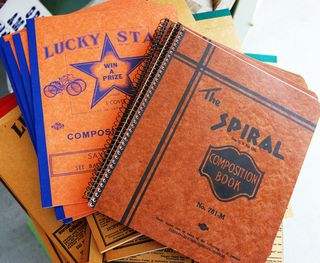
Fifth Grade
If your fidelity to
perfectionism is too high, you never do anything.
- David Foster WallaceI got A+’s in Handwriting.
In fifth grade, the only student
who came close to me in that subject
was a boy named Barry.
I don't know
what happened
to Barry and his handwriting
but mine led me
to hours of anguish.
to hours of anguish.
I’d get all the way to the end of a page
without making a mistake
and then
on the last line
if my cursive wasn’t just right
and if an erasure
threatened
to expose my imperfections
I'd have to re-start.
threatened
to expose my imperfections
I'd have to re-start.
My sister said I made her crazy
watching me
re-write
letters
to my 5th grade-pen pal.
And you know the envelopes watching me
re-write
letters
to my 5th grade-pen pal.
had to be perfect too (but that's
another story).
For class, I wrote my stories
over and over againand I wrote with a #3 pencil,
as if I didn’t want anybody
to see what I was writing.
Mother kept telling me
to use #2 pencils,
but the print
didn’t look as pretty
on the page.
To make a long story short:
I got A+ in Handwriting, but I didn’t turn
my work in
on time.
This led people to think I was slow.
- Esther Altshul Helfgott
4/23/13

Monday, April 22, 2013
PoMo2013- poem 22 - A Woman Is
 |
| Circa 1946 |
A woman is
her body of work
her body of work
which is
her thinking
inside her
pen
Esther Altshul Helfgott
4/22/13
Subscribe to:
Posts (Atom)
